To my faithful followers. I died 12 Aug 2015, at age 17 or 18. As my human grandmother used to say, “getting old is not for the faint of heart”. With this image, I hope to leave you with a smile.

To my faithful followers. I died 12 Aug 2015, at age 17 or 18. As my human grandmother used to say, “getting old is not for the faint of heart”. With this image, I hope to leave you with a smile.
I happened to mention to my ma that I now have over 1350 dog art images in my collection. Many more than my dog life expectancy will ever let me blog here. She didn’t raise an eyebrow. Shes knows I’m a hoarder and collect 1000’s of images. Anyway most are glommed from the net and doubtless violate some copyright, so its just as well. So, she says “How many cat art pics?”. Oh my, I hate to admit I have any, but I do, over 300. Even though there are 4 of us dogs in the household and only 1 cat, my ma is really a cat person. She spends a couple of hours each day snuggling Louie.

My brother Louie
Somehow my ma thought only 300 cat-pics meant I was anti-cat. Not that I’m not, but there are far fewer cat-art pics that dog-art pics. So she really didn’t have any evidence. But, feeling a twinge of guilt, I decided to bend all rules and post some cat art on this blog.
And what could be better than Christ with a cat? Here it is:

Christ with a cat
This image came from flickr. If the owner wants me to take it down, or provide credit and a link, please let me know. My only information is: “Holy Trinity, Long Melford, Suffolk–simon_K–flickr”. I know that it is a stained glass image. I can’t say for sure that it is Christ, but maybe — he was a good guy, surely he liked cats.
Your best friend,
Rita the dog [don’t click on video ad, if any, immediately below]
Many thanks to my friend Kris for sharing this with me. It is in Stuttgart Germany and shows three Boston Terriers who have mastered the mystical art of skateboarding. I just hope it is not a subtle Mercedes-Benz commercial. Anyway, you will really like this video:
Your best friend,
Rita the dog [ignore video ad, if any, immediately below]
LIFE magazine published many photos so inevitably there are some of dogs. A few of these are featured here. Maybe some more in a later post. The first is a really handsome whippet and a really great photo:
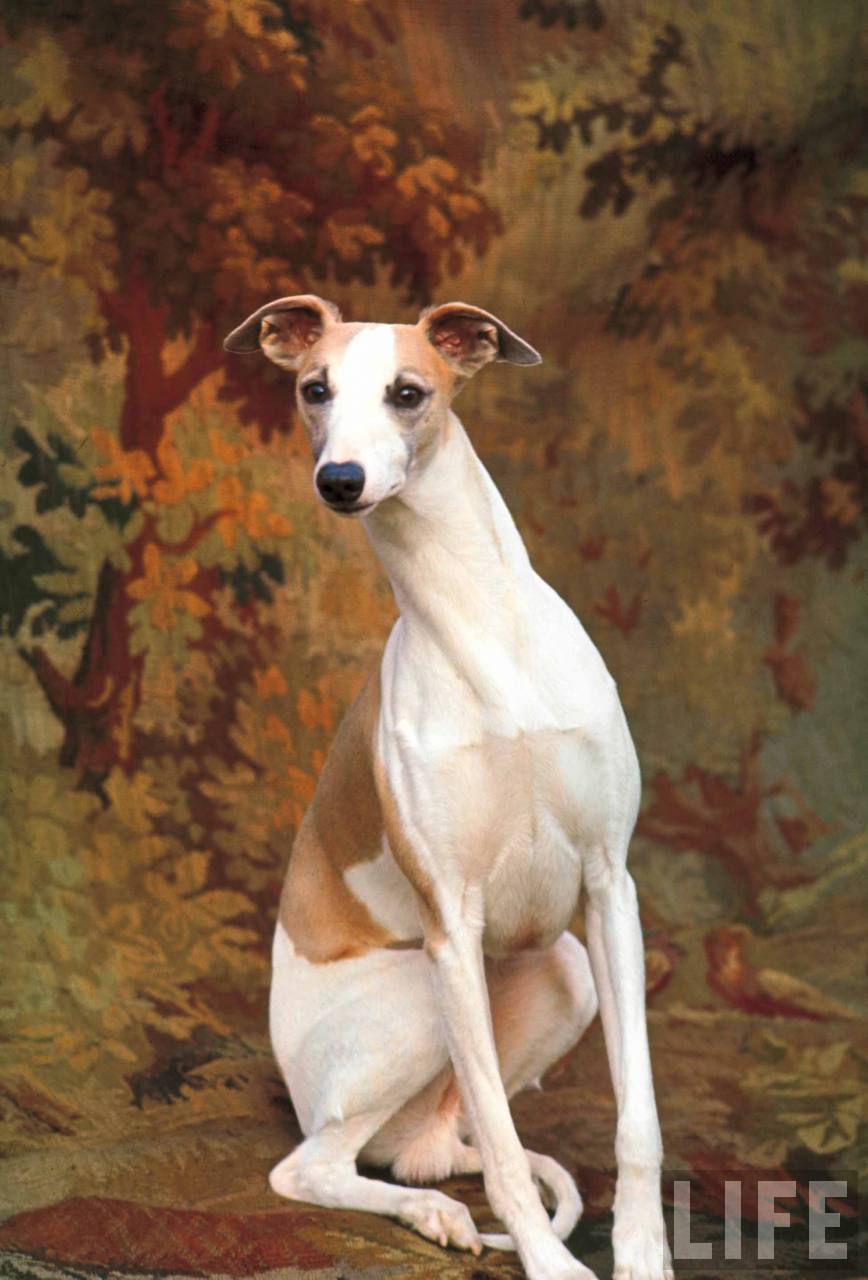
Portrait of whippet chosen Best in Show–LIFE–1963–photo by Nina Leen
Next we have the gorgeous Brooke Shields and her dog Ginger, back in 1986:
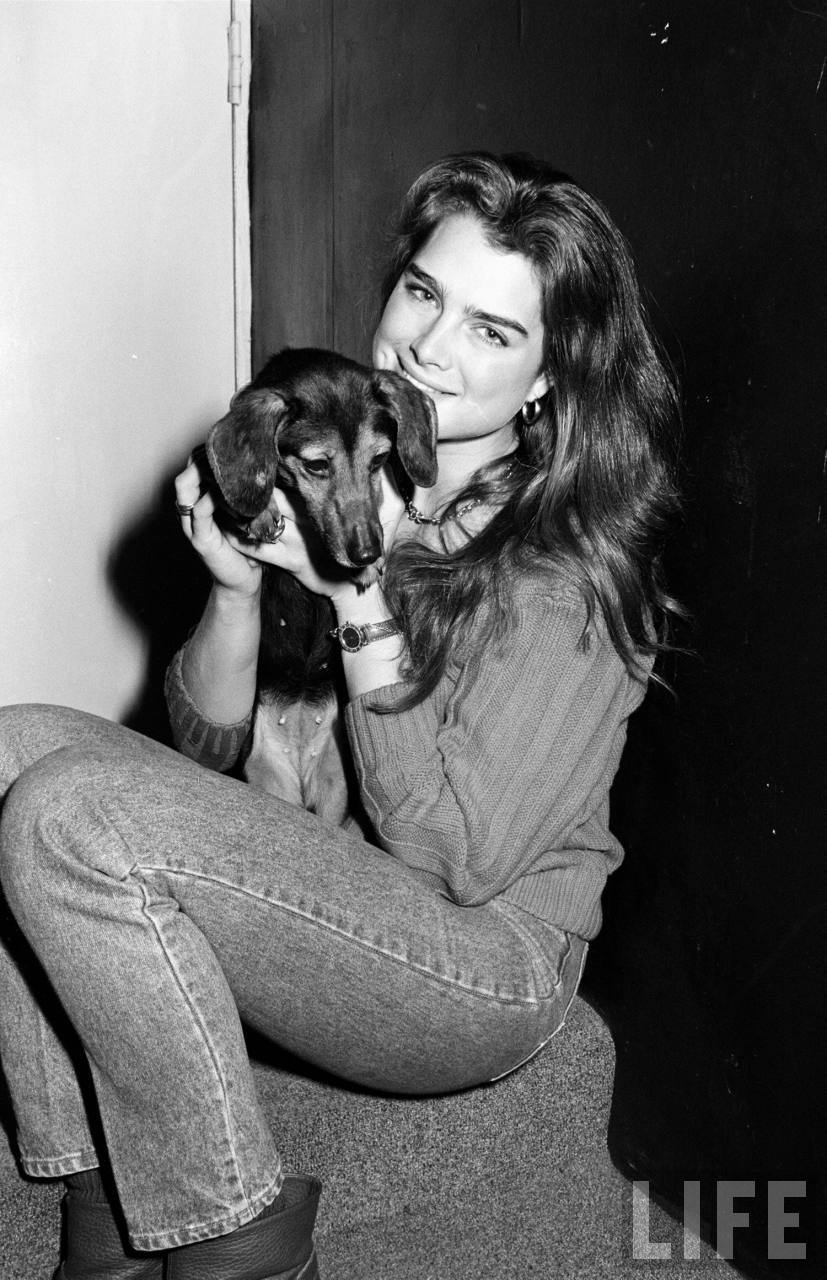
LIFE–Brooke Shields with dog Ginger–March, 1986
The next photo shows presidential candidate Bobby Kennedy running with his dog Freckles on an Oregon beach, back in 1968, before — but only a few days before his assassination on June 6, 1968:
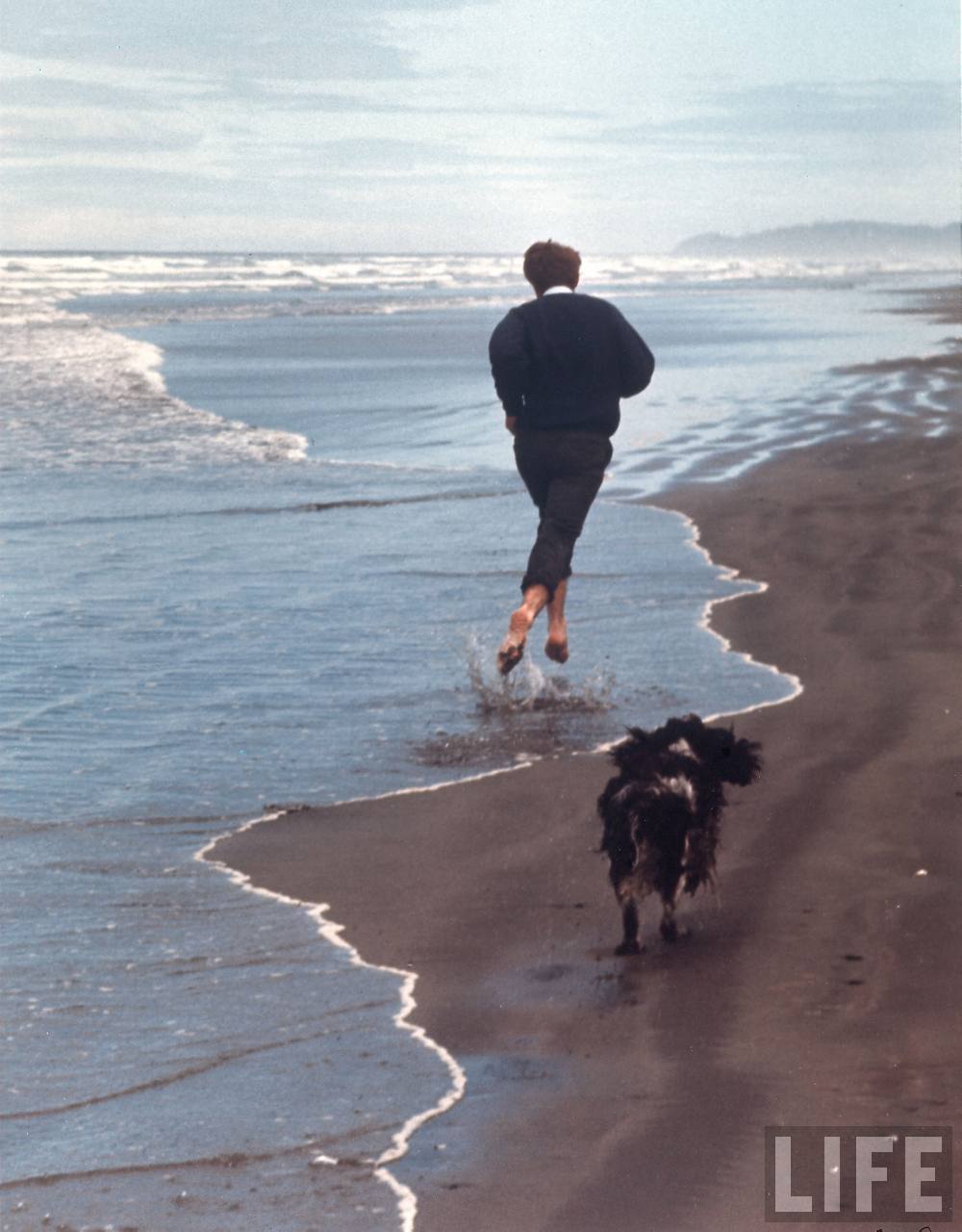
Bobby Kennedy and his dog, Freckles, running on an Oregon beach–1968
An adjusted version of this photo by Bill Eppridge appeared on the memorial issue of LIFE on June 14, 1968, but I think the one above looks better. You can see the cover version here.
Much earlier President Harry Truman had a dog named Feller shown in the next image as a puppy on the White house lawn, back in 1948:

President Truman’s Dog-Feller–white house lawn–1948-by-Thomas D Mcavoy
Finally, and this one gives me considerable pause for thought, we provide this stark and prescient image of Guantanamo Bay in Cuba back in 1961:
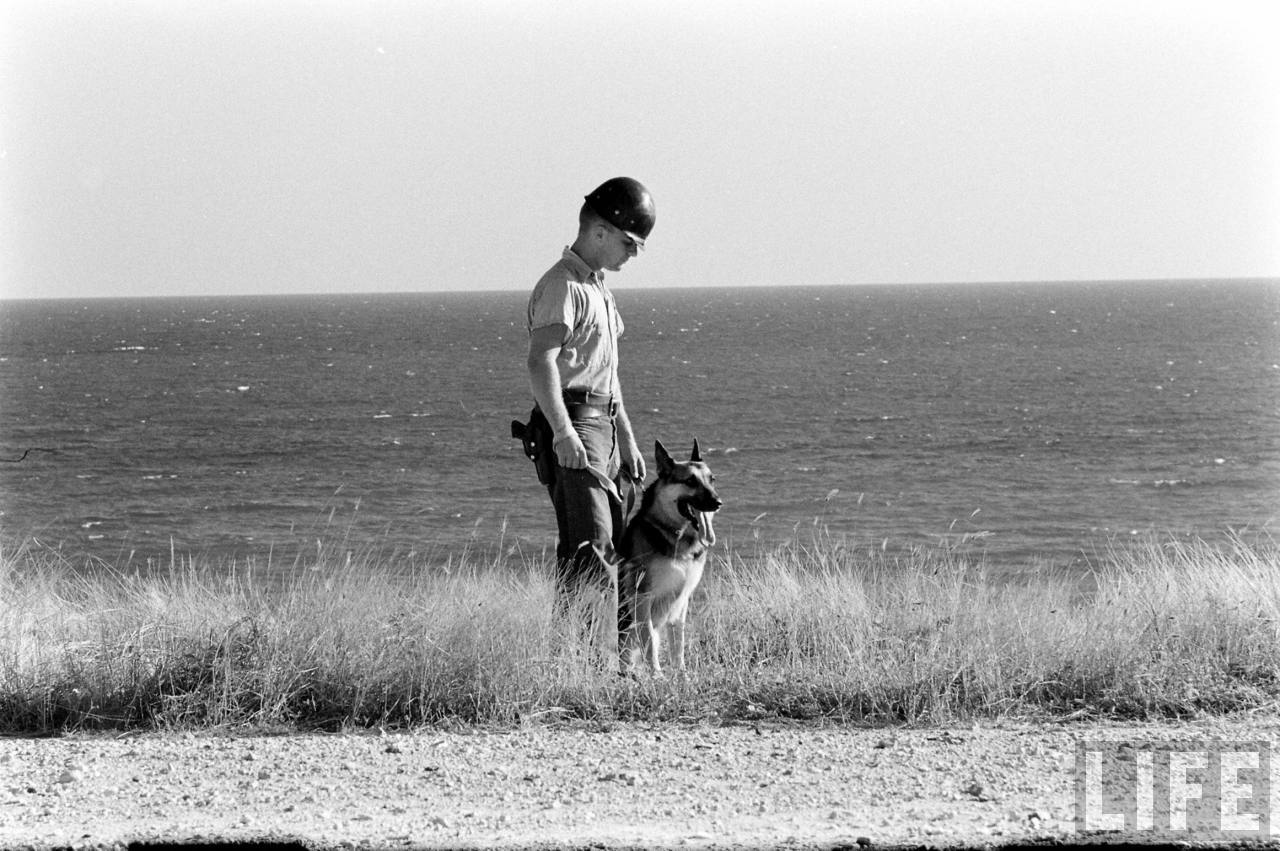
Guantanamo Bay In Cuba–1961–by Dmitri Kessel
May the rest of your day be great.
Rita the dog [ignore video add, if any, immediately below]
From time to time I just like to make my dad happy. Here is for you Dad:

LeBlanc Stewart, Julius – Nymphs Hunting – 1898
He’s an old guy, but I’m sure he will like that picture. The artist Julius LeBlanc Stewart (1855-1919) was an American who lived mostly in Paris. I’m not sure where he found these nymphal huntresses.
Your best friend,
Rita the dog [ignore video add, if any, immediately following]
Mostly too heavy for me, here are a few selected by yours truly, Rita the dog :), from 40 of the most powerful. Thanks Laura.
A dog named “Leao” sits for a second consecutive day at the grave of her owner, who died in the disastrous landslides near Rio de Janiero on January 15, 2011.

A dog is reunited with his owner following the tsunami in Japan in 2011

A dog is reunited with his owner following the tsunami in Japan in 2011

A girl in isolation for radiation screening looks at her dog through a window in Nihonmatsu, Japan on March 14
</>

Greg Cook hugs his dog Coco after finding her inside his destroyed home in Alabama following the Tornado in March, 2012
For credits of these photos or to view the other 36 goto to buzzfeed, the site from which these come.
Have an incredible day, yours,
Rita the dog [ignore video add, if any, immediately following]
I don’t know much about her royal highness but I do know that she loves dogs, and that’s enough for me. Can there be any doubt:

Princess Elizabeth at 10-years-old in 1936 with her first corgi
Here she is looking really happy five years later in 1941:

Queen Elizabeth II as a young Princess, with dog — 1941
I have no idea when this next photo was taken, but it is cute:

Princess Elizabeth with dog
She favors a breed, which you see even in the pictures above, called a Welsh Corgi. They look like this:

Pembroke Welsh Corgi
Pretty cute I’d say. But maybe not as cute as the queen herself who looked like this back in 1952 when she became the queen, which event my old man says he actually remembers:

Queen Elizabeth ii–photo by–Drothy Wilding
Since I love dog art, I dug around the net a bit and found that maybe the dog loving thing is in her genes:

van Dyck–The Three Eldest Children of Charles I–1635
And more recently this painting which shows Queen Victoria and Prince Albert in the early years of their marriage, and more importantly with some of their dogs:

Landseer’s ‘Windsor Castle in Modern Times’
If you’re interested in more historical royal dogs look here, where some of these images came from (thank you!).
And a painting of the young princess in 1933 at age 7, unfortunately without dogs:

Philip Alexius de Laszlo–Princess Elizabeth of York–Currently Queen Elizabeth II of England–1933
Born April 21, 1926 the queen is now 86 years old. Here is a picture (from Wikipedia) taken 5 years ago:

Queen Elizabeth II in 2007
I hate fanfare, but maybe the queen likes it. In any case, as you probably know, a huge fanfare called the Diamond Jubilee celebrating her 60 years as Queen of England is this year, and some of the big stuff is about to start right about now, including horse races and I don’t know what all, but (and I’m not sure I like this) at least one dog thing:

Rhodesian Ridgeback preparing for Diamond Jubilee
Seems like they could have had a Corgi or at least a Dorgi, the ‘breed’ the queen herself created as a cross between a Dachshund and a Corgi, apparently with a brick as height adjuster :).
Have a nice day, yours,
Rita the dog [ignore video add, if any, just below]
P.S. I found another dog blogger who wrote about the queen: here.
The Presidential Medal of Freedom recognizes those individuals who have made “an especially meritorious contribution to the security or national interests of the United States, world peace, cultural or other significant public or private endeavors”. Today President Barack Obama awarded this honorary medal to Bob Dylan and 12 others. Here is a photo from the New York Daily News:

President Barack Obama awarding Bob Dylan the Freedom Award, 29 May 2012
The official announcement of the Whitehouse gives details for all recipients. About Bob Dylan, recently turned 71 years old, they said:
Bob Dylan
One of the most influential American musicians of the 20th century, Dylan released his first album in 1962. Known for his rich and poetic lyrics, his work had considerable influence on the civil rights movement of the 1960s and has had significant impact on American culture over the past five decades. He has won 11 Grammys, including a lifetime achievement award. He was named a Commandeur dans l’Ordre des Art et des Lettres and has received a Pulitzer Prize Special Citation. Dylan was awarded the 2009 National Medal of Arts. He has written more than 600 songs, and his songs have been recorded more than 3,000 times by other artists. He continues recording and touring around the world today.
For those who wish to look back I found this picture, going back to the 1980’s (?) of Bob Dylan in his studio, with his dog:

Bob Dylan in studio with his dog, 1980’s (?) (Photo by David Michael Kennedy)
Oh, how time flies.
Have a nice day,
Rita the dog [ignore video ad, if any, immediately below]
There seems to be a fad these days for some dog owners in China to try and turn their dogs into pandas or tigers. Examples:


I’m pleased they are getting some children involved:

Also, in China a kind-hearted mother dog is actually nursing some tiger cubs:

Well, some of them look like tiger cubs, but to me some look like regular kittens. Either way it is a bit weird.
Note: the images above come from “The Telegraph” and from “Buzzsugar”.
Have a nice day.
Rita the dog [please ignore the video ad, if any, immediately below]
American photographer Walker Evans (1903-1975) documented the effects of the Great Depression on rural America. The book Let Us Now Praise Famous Men, by James Agee with photos by Walker Evans was an outgrowth of this effort. One of the iconic images from this book is:

Walker Evans–portrait of Allie Mae Burroughs in 1936, age 27– a tenant farmer’s wife
I say, this is an attractive and proud woman, old beyond her years, from constant hard work. This is not to minimize the hardship and suffering of the rural poor in America. Nonetheless, an interesting postlude to the Agee/Evans book is this 2005 report on the current status of the sharecroppers featured in the book, and of their descendants in Hale County Alabama .
Less well known, is that Walker Evans started taking photos of unsuspecting passengers on the New York subways in 1938. For three years he did this using a camera hidden in his coat. Many years later in 1966 the collected photos from this project were published in the Walker Evans book, Many are Called, with an introduction by James Agee written in 1940.
The first dog photo I would like to share with you today is one of those subway photos of Walker Evans:

Woman in Flower-Brim Hat and Dog–subway-NYC–1938–Walker Evans
Admittedly, he didn’t get the dog too well. Oh well. Still it is an interesting shot, taken 74 years ago.
Not so well known as Walker Evans but worthy of your attention is the street photographer Leon Levinstein. To quote the MET:
Leon Levinstein (American, 1910–1988), an unheralded master of street photography, is best known for his candid and unsentimental black-and-white figure studies made in New York City neighborhoods from Times Square and the Lower East Side to Coney Island.
The mere title of the Met’s show says yet more: “Hipsters, Hustlers, and Handball Players Leon Levinstein’s New York Photographs, 1950–1980“.
So here is a Levinstein shot:

Leon Levinstein–probably in New York–1956
And if you would like another you might have a look at beach bums.
Let us now turn to Garry Winogrand (1928-1984), yet another prolific street photographer of New York and elsewhere. You can find a nice biography of him here, the first paragraph of which I quote:
Garry Winogrand’s too short career defined street photography for future generations of photographers. He made photos of New York City and it’s inhabitants. He traveled the country is search of America. He captured the banalities, the excitement and the complex social realities of a modern city. Winogrand shot incessantly, at the time of his death he had over 2500 rolls of undeveloped film, over 6500 rolls of film that had not been contact printed and 300 contact sheets that showed no signs of being edited. This was a total of over 300,000 photographs that he had taken but not bothered to look at.
But he did look carefully at thousands of his photos and ended up publishing four books of them. To view a nice selection of his photos, look here. As a dog I have culled out a few with dogs, for your viewing pleasure:

Garry Winogrand–Dogs in park–New York–1970
Here is another:

Garrry Winograd–untitled–early 1970’s
The spotted one looks a bit like my sister Cosi and the shaggy thing in the back looks something like brother Jocko. Finally, here is one with a dog that looks like me (far right):

Garry Winograd–untitled–date unknown
But I’m not that fat, and I certainly don’t have uncontrollable ardor for any wiener dogs.
Changing pace, here is an amusing image by photographer Elliott Erwitt:

Felix, Gladys and Rover–Elliott Erwitt–New York–1976
Here is a photo, photographer and date unknown, showing J. Edgar Hoover (1895-1972) with a dog contestant in a New York City dog show:
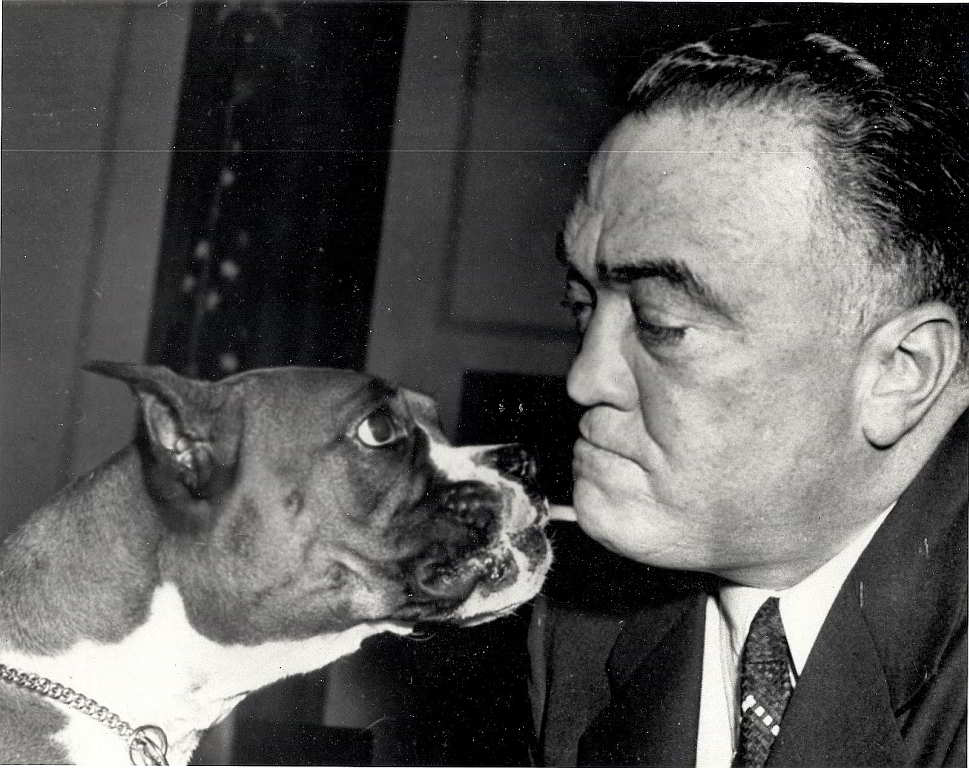
J. Edgar Hoover–with contestant NYC dog show (1960’s ?)
“Gordon Parks (1912-2006) is celebrated as a photographer, filmmaker, memoirist and breaker of color barriers”. So said the New York Times LENS blog, here, where you can also find a selection of 19 of Gordon Parks early photos, including this one from May, 1943, sixty-eight years ago (and two months before my human father was born):

Gordon Parks–A woman and her dog–Harlem section–NY–May-1943
Our last photo for this post is by William P. Gottlieb, best known as a photographer of American jazz artists of the 1930’s and 1940’s. It shows jazz and pop singing great, Billie Holiday, with her dog in 1946:

William P. Gottlieb–Billie Holiday with her dog, Mister, New York, 1946
Thats it for today, folks.
Your best friend,
Rita the dog [ignore video ad, if any, immediately below]


 Rita's Dog Blog
